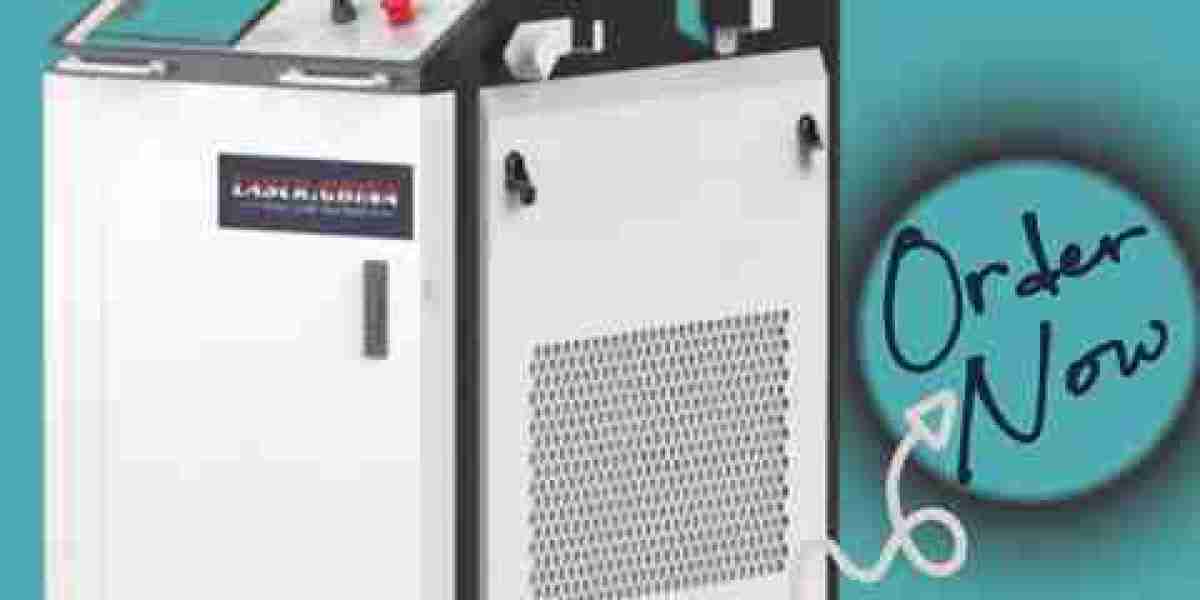

By employing advanced laser technology, this equipment offers a method of cleaning that combines precision, speed, and adaptability, making it suitable for a wide range of metals and applications.
The process of laser cleaning relies on the principle of removing contaminants, rust, oxidation, and coatings from metal surfaces through high-energy laser beams. These beams interact with the material at a microscopic level, effectively eliminating unwanted layers without causing damage to the underlying metal. Unlike traditional methods such as chemical treatments, sandblasting, or mechanical scraping, a laser metal cleaner operates in a non-contact manner, which significantly reduces the risk of scratches, wear, or other physical deformities on the surface.
One of the defining characteristics of a laser metal cleaner is its versatility. Industries ranging from automotive and aerospace to shipbuilding and heavy machinery benefit from this technology. In automotive manufacturing, for example, metal parts must often be stripped of rust or coatings before welding or painting. The laser metal cleaner achieves this efficiently, ensuring a smooth and uniform surface that meets strict industrial standards. Aerospace applications similarly demand meticulous attention to metal integrity, where even minor surface imperfections can have serious implications. Laser cleaning provides the precision required to maintain structural quality while ensuring a high level of cleanliness.
Maintenance and refurbishment tasks also see remarkable improvements with the use of a laser metal cleaner. Traditional cleaning methods often involve abrasive techniques or harsh chemicals, which can be time-consuming and potentially hazardous. With laser cleaning, operators can remove stubborn residues, paint, or corrosion layers safely and efficiently. This is particularly beneficial in environments where equipment downtime needs to be minimized, as the process is fast and requires minimal preparation.
The technology behind a laser metal cleaner is grounded in its ability to target specific contaminants without affecting the base metal. This selective cleaning is achieved through adjustable laser intensity and pulse frequency, allowing operators to tailor the process according to the type of metal and the nature of the surface impurity. Metals such as steel, aluminum, copper, and titanium respond differently to laser energy, but the system can be calibrated to achieve optimal results in each scenario. The precision of this approach ensures that only the unwanted material is removed, leaving the metal intact and ready for further processing or coating.
Another notable aspect of the laser metal cleaner is its environmental friendliness. Unlike chemical cleaning methods that generate hazardous waste and require extensive handling, laser cleaning produces minimal residue. Dust or removed material can often be captured with basic filtration systems, significantly reducing environmental impact. This aligns with the growing global emphasis on sustainable industrial practices, making laser cleaning not only an effective choice but also an environmentally responsible one.
The operation of a laser metal cleaner is also highly adaptable. Mobile or handheld units provide flexibility for on-site cleaning, while larger stationary models can handle extensive industrial components. Handheld devices are particularly useful for detailed work or for cleaning complex geometries where traditional abrasive methods are impractical. Stationary systems, on the other hand, are ideal for high-volume cleaning in production lines, ensuring consistent quality across all processed parts.
Training and operational safety are critical considerations in using a laser metal cleaner. Operators need to understand the interaction between laser parameters and different metal types, ensuring that cleaning is effective without compromising the surface. Modern laser cleaning systems are often equipped with safety features such as automatic shut-off, protective housings, and controlled exposure settings, which enhance operator safety while maintaining high performance.
Applications of a laser metal cleaner extend beyond industrial manufacturing. Restoration and conservation projects benefit significantly from this technology. For example, historical metal artifacts or machinery can be cleaned to remove corrosion or grime without damaging the original structure. Museums, cultural heritage institutions, and restoration specialists utilize laser cleaning to preserve the integrity of metal artifacts while restoring their visual appeal and structural stability.
In addition, laser cleaning technology can be integrated into automated systems, such as robotic arms, for high-precision industrial operations. This integration allows for continuous operation with minimal human intervention, ideal for large-scale production or repetitive cleaning tasks. The automation potential of a laser metal cleaner enhances productivity while maintaining consistent quality standards across numerous metal components.
The adaptability of a laser metal cleaner also extends to its ability to handle various thicknesses of coatings and layers. From light oxidation to heavy rust deposits, the system can be adjusted to remove unwanted materials effectively. This makes it highly suitable for maintenance tasks in environments where metal surfaces are exposed to harsh conditions, such as marine equipment, pipelines, and outdoor industrial structures.
From a technological perspective, the ongoing development of laser metal cleaners focuses on improving efficiency, power management, and portability. Newer systems offer higher cleaning speeds, reduced energy consumption, and enhanced user interfaces that simplify operation. These advancements contribute to the growing adoption of laser cleaning in industrial and commercial settings, replacing older, labor-intensive methods.
In terms of practical deployment, the laser metal cleaner is remarkably easy to implement in existing workflows. Its compact design, minimal operational setup, and non-contact cleaning method allow it to be integrated into various stages of manufacturing, maintenance, or restoration. Businesses adopting laser cleaning technology can achieve consistent results without significant changes to infrastructure or labor practices.
Safety, environmental impact, efficiency, and versatility converge in the laser metal cleaner, making it a compelling choice for modern metal cleaning applications. Its ability to deliver precise results, adapt to various metals, and minimize material waste positions it as a cornerstone technology in industries requiring meticulous surface preparation and maintenance.
Final Thoughts, the laser metal cleaner is a revolutionary tool that elevates metal cleaning processes to new standards of precision, efficiency, and adaptability. Whether in industrial production, maintenance, or restoration, its use ensures superior surface quality, reduces environmental impact, and offers unmatched operational convenience. As industries continue to evolve and demand more sustainable and effective cleaning methods, the laser metal cleaner stands out as an indispensable solution that meets modern challenges with advanced technology and remarkable results.