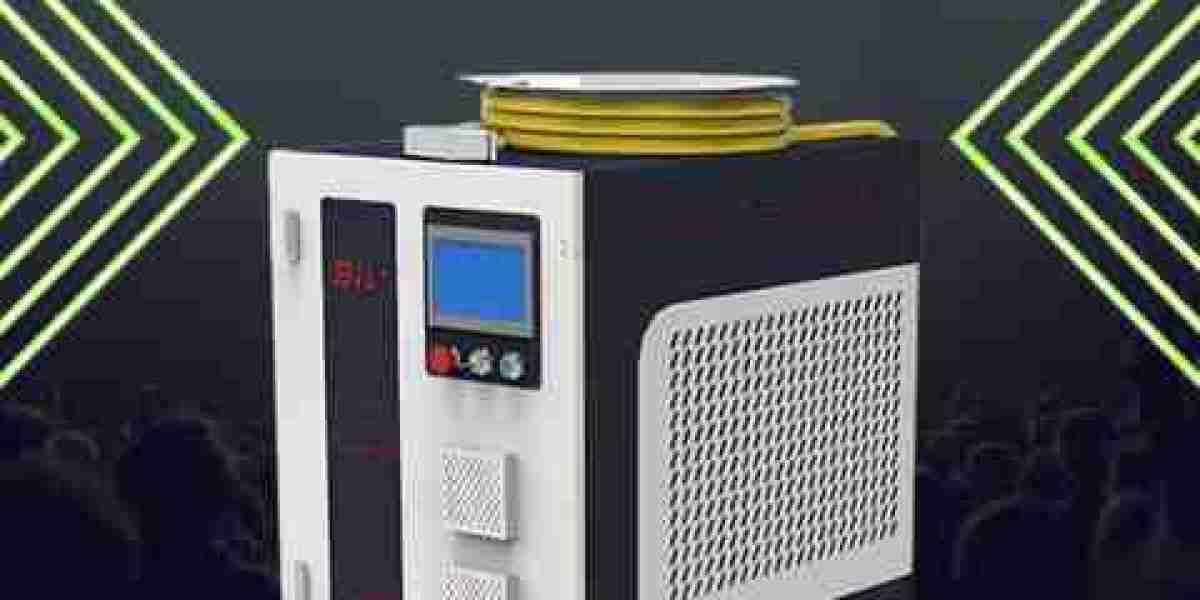

In modern industries, maintaining the cleanliness and quality of surfaces is a crucial part of production. The fiber laser cleaning machine has emerged as a leading solution for precision cleaning across a wide range of applications. Utilizing advanced laser technology, these machines provide controlled, efficient, and highly accurate cleaning processes. Unlike traditional mechanical or chemical methods, fiber laser cleaning operates without direct contact, reducing the risk of damage to sensitive surfaces.
One of the primary applications of a fiber laser cleaning machine is in the preparation of surfaces for further processing. In metalworking industries, removing rust, paint, scale, or oxides is essential for ensuring proper adhesion of coatings or for preparing metal for welding. With fiber laser cleaning machines, this process can be carried out in a highly controlled manner, targeting only the unwanted material without affecting the underlying substrate. This precision makes it ideal for high-value parts where quality cannot be compromised.
The automotive industry has seen significant adoption of fiber laser cleaning machines. From cleaning molds and dies to removing paint and coatings from body panels, these machines streamline operations and improve production efficiency. The speed and precision offered by laser cleaning allow manufacturers to maintain consistent quality across large production volumes while reducing the reliance on labor-intensive manual cleaning methods.
In addition to industrial applications, fiber laser cleaning machines have found a role in the maintenance of delicate historical artifacts and artworks. Restoration projects require careful removal of contaminants such as dirt, corrosion, or old coatings. The non-contact nature of laser cleaning ensures that these valuable surfaces are preserved while contaminants are safely removed. This versatility highlights the broad capabilities of fiber laser cleaning technology, making it a tool not only for industry but also for conservation efforts.
The operational process of a fiber laser cleaning machine revolves around the use of a high-energy laser beam that interacts with surface contaminants. When the laser is directed at the material, it causes the contaminants to vaporize or be dislodged without causing thermal damage to the base material. Operators can adjust parameters such as laser power, scanning speed, and focal distance to match the specific cleaning requirement. This flexibility ensures that every project, from heavy rust removal to delicate surface polishing, can be handled effectively.
Environmental considerations have become increasingly important in manufacturing and maintenance industries. Traditional cleaning methods often rely on chemicals or abrasive materials, which can produce hazardous waste and require special disposal procedures. Fiber laser cleaning machines offer a cleaner alternative by eliminating the need for chemicals and minimizing secondary waste. The process generates minimal residue, often in the form of tiny particles that can be easily collected and filtered. This aligns with modern sustainability initiatives and helps companies maintain eco-friendly practices.
Safety is another critical factor in adopting fiber laser cleaning machines. While lasers are powerful tools, modern systems are equipped with safety features to protect operators. Enclosed workstations, interlock systems, and precise control software ensure that the laser beam is contained and only interacts with the target surface. Additionally, operators are trained to handle the equipment according to strict safety standards, reducing risks associated with high-energy laser operation.
In sectors such as aerospace, electronics, and medical device manufacturing, surface quality and precision are paramount. Fiber laser cleaning machines offer unmatched consistency and repeatability, making them ideal for industries where even minor imperfections can lead to functional issues or regulatory non-compliance. Components such as turbine blades, electronic connectors, and surgical instruments benefit from the high accuracy and controllable cleaning parameters of fiber laser technology.
The integration of automation with fiber laser cleaning machines has further enhanced their capabilities. Robotic arms, CNC systems, and programmable motion control allow these machines to perform complex cleaning tasks on irregularly shaped components or large assemblies. Automated cleaning ensures uniform results and can significantly reduce operational downtime, which is crucial for industries operating on tight schedules and high-volume production lines.
Investment in fiber laser cleaning technology represents a strategic decision for companies looking to modernize their operations. By adopting this technology, organizations can reduce dependency on chemical cleaning agents, minimize labor-intensive procedures, and achieve higher levels of precision and efficiency. The combination of adaptability, speed, and environmental benefits positions the fiber laser cleaning machine as a transformative tool in contemporary manufacturing and maintenance environments.
In summary, the fiber laser cleaning machine is not just a piece of equipment; it is a gateway to modern, efficient, and environmentally responsible surface treatment. Its applications span industries from automotive and aerospace to electronics and heritage conservation. The precision, adaptability, and safety features of this technology provide a solution that meets both operational and environmental requirements. As industries continue to evolve, fiber laser cleaning machines are set to play an increasingly vital role in ensuring quality, efficiency, and sustainability in surface treatment processes.