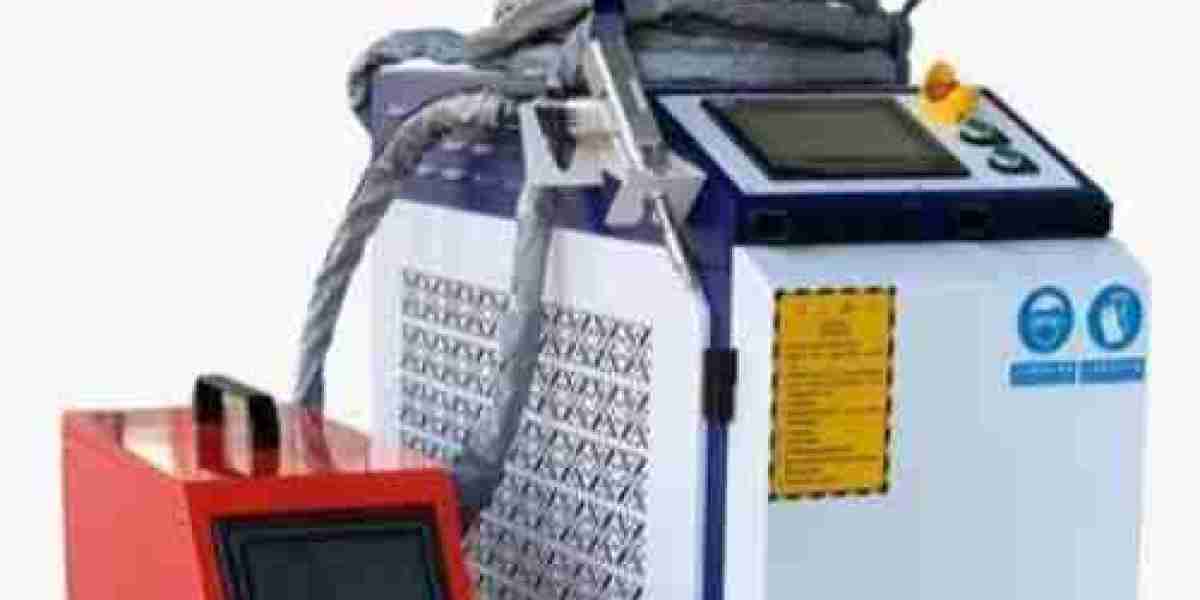

The laser fiber welding machine has become a defining solution in contemporary metal joining, shaping how industries approach precision fabrication, assembly, and large-scale production. As manufacturing standards continue to rise, companies seek welding technologies that align with automation, consistency, and high-quality output. Within this landscape, fiber laser–based welding systems are widely adopted across industrial sectors due to their adaptability and advanced working principles.
A laser fiber welding machine operates by generating a concentrated laser beam through a fiber-optic source, directing controlled energy to fuse metal components together. This process supports clean weld seams, stable operation, and suitability for a wide range of metals and thicknesses. Because of its modern engineering approach, this welding method has become deeply integrated into industrial workflows where accuracy, speed, and repeatability are essential.
The global manufacturing sector increasingly relies on fiber laser technology for welding tasks that demand uniformity across high production volumes. From automotive manufacturing lines to heavy industrial fabrication units, the laser fiber welding machine is positioned as a reliable solution for businesses seeking consistent weld quality while maintaining operational efficiency.
Role of Laser Fiber Welding Machine in Industrial Manufacturing
Industrial manufacturing requires welding systems that can handle complex designs, repetitive tasks, and demanding production schedules. The laser fiber welding machine fits naturally into this environment by supporting automated and semi-automated operations. It is frequently used in production lines where components must be welded with minimal deviation, ensuring compatibility with downstream assembly processes.
In industries such as automotive body manufacturing, precision components must be joined without altering structural integrity. The laser fiber welding machine is used to weld chassis parts, frames, brackets, and internal assemblies. Its application supports uniform joining across thousands of identical parts, helping manufacturers maintain strict quality benchmarks.
Electronics manufacturing also benefits from laser-based welding systems. Delicate metal housings, battery components, and micro-scale assemblies require controlled energy input. Fiber laser welding technology allows manufacturers to achieve neat welds on small components without introducing excessive heat that could affect surrounding materials.
Integration with Automation and Smart Production Lines
Modern factories increasingly depend on automated systems and robotic integration. The laser fiber welding machine is designed to align with these trends, making it suitable for robotic arms, CNC systems, and digitally controlled production lines. This compatibility allows manufacturers to incorporate welding operations seamlessly into automated workflows.
In smart factories, welding parameters can be adjusted digitally to match different production requirements. A laser fiber welding machine can be programmed for varying joint types, material thicknesses, and production speeds. This flexibility supports manufacturers who handle diverse product lines or custom fabrication orders.
Automation also contributes to consistent weld output across shifts and production cycles. By integrating laser fiber welding machines into robotic systems, manufacturers can reduce dependency on manual adjustments while maintaining repeatable results across large volumes of work.
Applications Across Multiple Industries
The laser fiber welding machine is widely used across a broad range of industries, each with its own technical demands and material standards. In the automotive sector, it supports the joining of steel and aluminum components used in vehicle structures and assemblies. The aerospace industry applies fiber laser welding technology for lightweight metal components where dimensional accuracy is essential.
In the medical device industry, precision welding is required for surgical tools, implants, and equipment housings. The controlled welding process offered by a laser fiber welding machine supports clean and uniform joints that meet strict industry standards. This makes it a suitable option for manufacturers operating under regulated production environments.
Construction and heavy machinery manufacturers also use laser-based welding systems for metal frames, enclosures, and structural parts. The adaptability of the laser fiber welding machine allows it to handle both thin and thick materials used across industrial construction projects.
Material Compatibility and Manufacturing Flexibility
One of the reasons the laser fiber welding machine is widely adopted is its ability to work with various metals commonly used in manufacturing. Stainless steel, carbon steel, aluminum, and alloy metals are frequently processed using fiber laser welding systems. This versatility allows manufacturers to standardize their welding equipment across different production needs.
In fabrication workshops, switching between different materials is a common requirement. The laser fiber welding machine supports this flexibility, making it suitable for contract manufacturing, custom fabrication, and mixed-material production environments. This adaptability helps businesses respond to diverse customer requirements without the need for multiple welding systems.
Metal thickness variations are also common in industrial production. Laser-based welding allows precise control over energy input, enabling manufacturers to manage different material gauges efficiently within a single production setup.
Adoption in Global Manufacturing Markets
The global manufacturing market has seen steady growth in the adoption of laser fiber welding machine technology. Regions with strong industrial bases, including Asia, Europe, and North America, increasingly rely on fiber laser welding for both mass production and specialized fabrication tasks.
Manufacturers in export-oriented industries value consistent welding quality, as it directly impacts product reliability and international compliance standards. The laser fiber welding machine supports these requirements by delivering stable welding performance across high-volume production runs.
Small and medium-sized enterprises also invest in laser-based welding systems as they expand their production capabilities. By integrating fiber laser welding technology, these businesses position themselves to compete with larger manufacturers in terms of quality and efficiency.
Influence on Production Efficiency and Output Quality
In modern production environments, efficiency is closely linked to equipment reliability and process stability. The laser fiber welding machine contributes to streamlined production by enabling continuous welding operations with minimal interruptions. This consistency helps manufacturers meet tight deadlines and maintain steady output levels.
Weld quality plays a critical role in product durability and customer satisfaction. Fiber laser welding produces clean, uniform weld seams that align with aesthetic and structural expectations across industrial applications. This consistency is especially important in visible weld joints, such as consumer products, appliances, and architectural components.
By maintaining controlled welding conditions, manufacturers can achieve predictable results that support quality assurance processes and reduce variability across production batches.
Growing Demand in Custom and Precision Fabrication
Custom fabrication and precision manufacturing are expanding sectors within the industrial landscape. The laser fiber welding machine is increasingly used by workshops specializing in tailored components, prototypes, and short-run production. Its ability to handle detailed designs makes it suitable for projects that require exact alignment and clean finishing.
In precision fabrication, dimensional accuracy is critical. Fiber laser welding technology allows manufacturers to join components while maintaining tight tolerances. This capability supports industries such as robotics, automation equipment, and high-end machinery manufacturing.
As demand for customized metal products continues to rise, laser-based welding systems play a central role in meeting client expectations for quality and consistency.
Long-Term Industry Relevance
The laser fiber welding machine is not just a short-term technological trend; it represents a long-term shift toward advanced manufacturing solutions. As industries move toward digitalization, automation, and smart production systems, fiber laser welding technology aligns with these evolving requirements.
Manufacturers investing in laser fiber welding machines position themselves to adapt to future production demands, including higher output expectations, stricter quality standards, and more complex product designs. The widespread adoption of this technology reflects its relevance across multiple sectors and production scales.